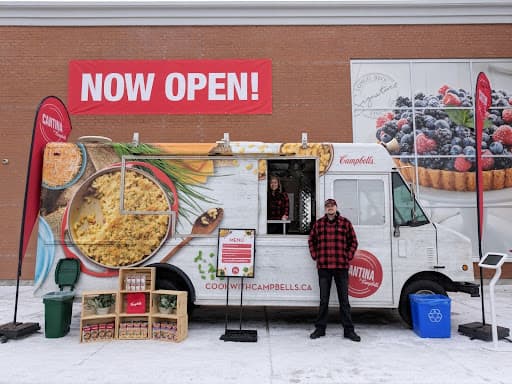
Every year, brands spend billions sending their products on the road, and the results speak for themselves. Mobile marketing tours, powered by branded trucks, vans, and pop-up vehicles, bring immersive experiences directly to consumers in cities nationwide. More than any vehicle wrap or eye-catching display, the people behind the activation determine whether a campaign converts passersby into loyal customers.
The numbers make a strong case. Experiential marketing is rated the single most effective marketing tactic at 38.34%, outperforming digital advertising, content marketing, and traditional media combined. In 2024, B2C companies invested an estimated $90.3 billion in experiential campaigns, a 10.3% jump from the year before, with the United States accounting for nearly half of global spend. Eighty percent of Americans show genuine interest in brand experiences, and 62% say they want to participate. Behind every activation that earns those numbers stands a trained, customer-facing brand ambassador who transforms a roadside stop into a memorable brand moment.
Brand Ambassador Roles and Local Expertise
Brand ambassadors attract crowds, deliver messaging, distribute samples, capture leads, and build the connections that turn brief encounters into lasting customer relationships. Their scope goes well beyond showing up and smiling.
What separates a high-performing ambassador from an average one often comes down to local knowledge. Someone living in the neighborhood knows which conversation openers land, understands the cultural context of a block, and projects a familiarity traveling national teams cannot replicate. Consumers notice inauthenticity quickly; local sourcing closes that gap.
Training protocols standardize product knowledge, engagement scripts, and data collection procedures so messaging stays consistent across every market, whether rolling through Houston, Chicago, or Portland.
Conversion Rates and Sampling Impact
Product sampling moves the needle fast: 73% of consumers are more likely to buy after trying a sample, with conversion rates hitting 25-40% for food and beverage, 15-30% for beauty, and 10-20% for household products. Live brand experiences push those numbers further, 65-75% of consumers are more inclined to purchase after one, and 91% report a higher likelihood of buying after a brand activation.
Street teams add another layer of reach. A well-run activation pulls a 30-50% engagement rate from passersby, averaging 8-15 leads per ambassador per hour. Pop-up experiences reinforce that dynamic, with 85% of visitors sharing on social media and 40-65% making a purchase during or within a week of the event.
Social Media Amplification
The content multiplier effect transforms activations into ongoing marketing assets. A striking 98% of consumers create digital or social content at events, and 87% of attendees share their experience on Instagram. In Q1 2026, user-generated content drove 6.73x higher conversion rates than non-UGC content, making every shared story or tagged post a measurable business driver.
This organic amplification extends campaign reach far beyond the tour's physical footprint, tapping directly into attendees' broader social networks.
ROI Metrics and Measurement
Experiential campaigns consistently deliver a 3:1 to 5:1 return on investment, with high-performing activations reaching 10:1. Well-executed programs generate 40% more qualified leads than traditional methods, and brands that implement structured measurement frameworks see 74% higher budget approval rates for future programs.
To measure ROI accurately, track coupon redemption rates tied to event-specific promo codes, then compare retail sales lift in targeted zip codes against control markets. Attribution windows of 30 to 90 days capture the full downstream effect of a single activation.
Staffing Best Practices
Staffing directly determines campaign performance. Multi-step vetting processes should include application review, experience verification, and interviews assessing communication skills, reliability, and relevant event experience.
Pre-event virtual training (one to two hours) covers brand immersion and product knowledge; day-of briefings (30 to 60 minutes) lock in logistics, booth layout, and equipment operation. Targeted employee training correlates with a 17% productivity increase and a 21% profitability boost.
Tactical Recommendations
For business owners planning mobile tour activations:
- Source ambassadors locally who understand regional nuances.
- Implement structured training covering product knowledge and brand narrative.
- Establish clear data collection procedures from day one.
- Build measurement frameworks before the tour launches, not after.
Treating brand ambassadors as strategic team members rather than temporary labor ensures that product conviction translates directly into consumer engagement, qualified leads, and measurable sales conversion.
Power Your Next Mobile Tour with Ignition XM
Ready to bring your brand directly to consumers nationwide? Ignition XM is a full-service mobile marketing agency that handles everything your campaign needs, from fully wrapped branded food trucks and glass display vehicles to retro trailers, interactive builds, and mobile LED displays. Whether you're executing a product sampling launch, a pop-up activation, or a multi-city nationwide tour, Ignition XM delivers end-to-end execution: vehicle branding, staffing, permits, routing, and on-site logistics. Trusted by brands like Phlur, Folgers, and Nutella, Ignition XM makes it easy to put your brand on the road.
Explore their food truck rental and start planning your activation today.